

 admin
admin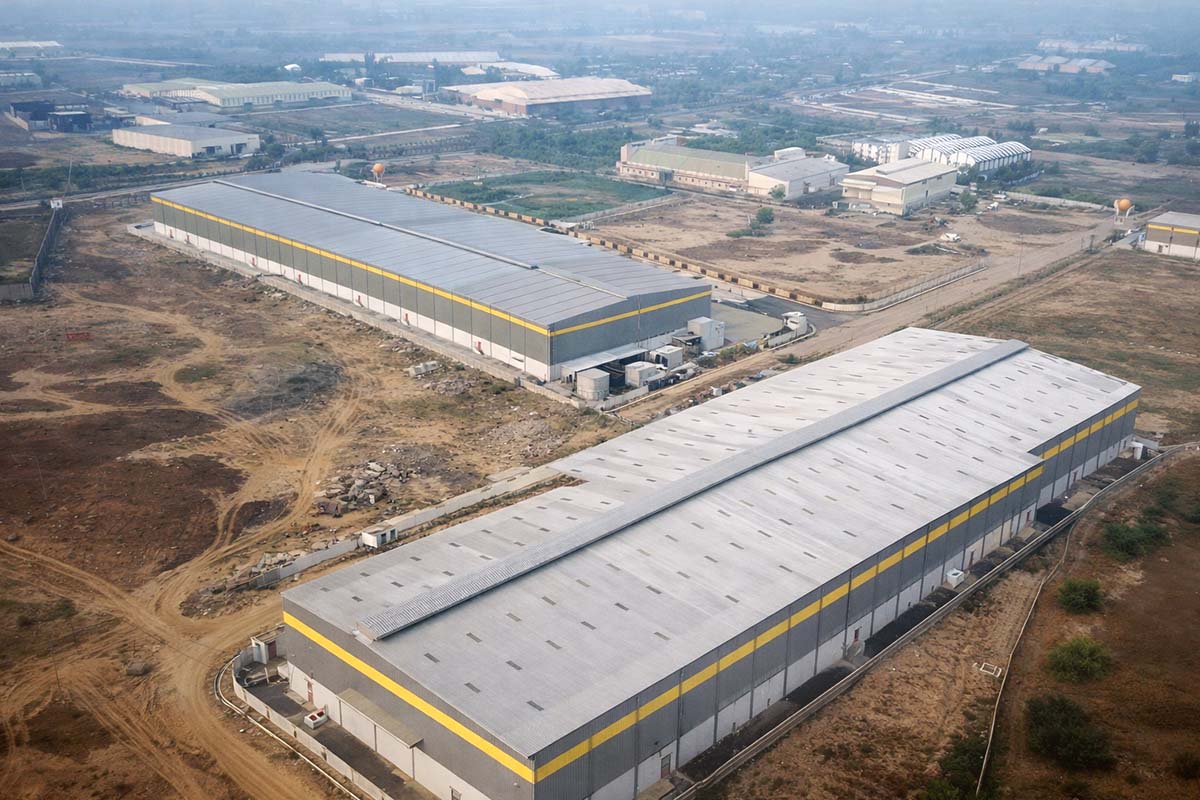
Gujarat’s warehousing market is becoming increasingly sophisticated, creating stronger demand for modern industrial and logistics infrastructure. For businesses evaluating a Grade A warehouse in Gujarat, the decision is no longer based only on built-up area, specifications, or storage capacity. Location, connectivity, internal movement, and operational support can be equally important. As businesses look for a Grade A warehouse in Gujarat, an important question goes beyond specifications and built-up area: does the infrastructure actually help goods move faster and more reliably?
For a modern warehouse in Gujarat, efficiency is increasingly about movement. Trucks need predictable access, loading and unloading need to happen without unnecessary delays, inventory needs to flow safely, and the surrounding infrastructure needs to support dispatch and distribution. A warehouse can offer impressive storage capacity and still become operationally inefficient if movement is poorly planned.
This is why Grade A warehousing should be viewed as a movement-first logistics asset, not simply a larger storage box. The real value lies in how well roads, access, loading areas, utilities, security, and supporting facilities work together.
Your warehouse should move your business forward, not slow it down.
Discover Mascot’s Industrial Parks
A Grade A Warehouse Should Be Designed Around Movement
Storage is only one part of a warehouse operation. The other part is everything that happens before, between, and after storage: receiving, unloading, internal movement, picking, staging, and dispatch. For a Grade A warehouse in Gujarat, this means infrastructure should be planned around the movement of heavy vehicles, material, and people. Internal roads, access points, turning areas, and loading zones can directly influence how smoothly a warehouse functions.
The practical indicators of an efficient warehouse include:
- Smooth truck circulation.
- Efficient loading and unloading.
- Reliable internal roads and access.
- Organised staging and parking.
- Secure inventory movement.
- Reliable utilities and emergency access.
- Strong connectivity to highways and logistics corridors.
When these elements work together, operational delays can be reduced, and businesses get a more predictable environment for receiving, storing, and dispatching goods.
Why Truck Circulation Matters More Than Storage Capacity Alone
Every delayed truck creates friction. Congested internal roads, difficult turning movements, or poorly positioned access points can affect loading schedules and dispatch reliability. That makes movement a core consideration when evaluating an industrial logistics park in Kheda. A warehouse location should be assessed not only by how much space it provides, but also by how efficiently vehicles can enter, circulate, load, unload, and leave. Road networks, entry points and highway access are therefore operational infrastructure, not just project specifications. They influence how efficiently raw materials arrive and finished goods leave.
For a logistics park in Kheda, this movement-first approach can be especially valuable because the surrounding region is already an established warehousing and logistics cluster.
Don’t let your warehouse become a bottleneck for your business.
Explore Mascot’s Logistics Projects
Loading, Dispatch, and Inventory Flow Define Warehouse Efficiency
The warehouse floor is only one part of the movement chain. Loading bays, staging areas, vehicle access, and internal circulation all influence how quickly goods can move from receiving to dispatch. This is where a well-planned Kheda industrial and logistics park can offer an advantage. When roads, utilities, security, weighing facilities, emergency access, and other support infrastructure are planned as one ecosystem, businesses have a stronger operational foundation. The objective is not simply to provide warehouse space. It is to create an environment where receiving, storage, movement, and dispatch can function with fewer infrastructure-related bottlenecks.
That is what gives modern logistics infrastructure in Gujarat its real value: it should solve practical operational challenges rather than simply add facilities to a project brochure.
Safety and Operational Continuity Are Part of Efficiency
An efficient warehouse also needs to keep people, inventory, and vehicles moving safely. Security, controlled access, and emergency entry or exit arrangements can help create a more organised operating environment. For logistics operations, these systems matter because disruption can affect dispatch schedules, inventory movement, and business continuity. This is particularly relevant when evaluating a warehouse in Gujarat, where businesses increasingly expect modern logistics infrastructure to support more than basic storage.
The result is an operating environment where safety and efficiency are planned together rather than treated as separate requirements.
The right infrastructure can change how your warehouse performs.
Highway Connectivity Can Become a Warehouse Advantage
No warehouse operates in isolation. Its efficiency depends partly on how easily it connects with highways, manufacturing clusters, suppliers, markets, and distribution networks. That makes connectivity a major part of logistics infrastructure in Gujarat and a key factor when evaluating a logistics park in Kheda.
For businesses, the movement of raw materials and finished products can be influenced long before a vehicle reaches the warehouse gate. Strategic location and access to major transport corridors can support more predictable logistics planning.
This is why location and warehouse infrastructure need to be evaluated together.
What Should Businesses Look for in a Grade A Warehouse in Gujarat?
A Grade A warehouse in Gujarat should not be judged by one specification alone. Its efficiency is shaped by how well different parts of the logistics ecosystem work together.
Before choosing a warehouse in Gujarat, businesses should ask:
- Can heavy vehicles circulate without unnecessary bottlenecks?
- Are internal roads and access points designed for industrial traffic?
- Are loading and unloading operations planned for smooth dispatch?
- Is the location connected to important highways and industrial markets?
- Are security and emergency access systems in place?
- Are utilities and support facilities designed for reliable operations?
When infrastructure can answer these questions effectively, warehouse efficiency becomes more than a claim. It becomes part of the everyday operating experience. The broader point is simple: Grade A standards should translate into better movement, safer operations and greater reliability, not just a longer list of amenities.
Stop looking for more space. Start looking for better efficiency.
Find Your Industrial Opportunity
How Mascot’s Kheda Project Supports Efficient Logistics Operations
This is where the discussion becomes more than a generic Grade A warehouse checklist. Mascot’s portfolio includes Mascot Sumar Industrial & Logistics Park in Kheda, positioned within the company’s wider industrial and logistics development network across Gujarat. Mascot’s Kheda project is positioned for manufacturing, warehousing and logistics operations, with infrastructure designed to support day-to-day movement and operational requirements.
Internal Infrastructure for Smoother Vehicle Movement
Mascot’s industrial parks are planned with internal road networks to support industrial vehicle movement. For a logistics operation, organised internal circulation can help vehicles reach loading, unloading, and dispatch areas more efficiently.
Security and Controlled Access
Security measures and controlled access are important parts of a logistics environment where inventory, vehicles, and people are constantly moving. Mascot’s industrial park infrastructure includes security systems as part of its support facilities.
Weighbridge and Emergency Access
Weighbridge facilities can support vehicle and cargo handling requirements, while emergency entry and exit provisions are important for operational continuity and safety. These are among the support facilities listed for Mascot’s industrial park infrastructure.
Connectivity and Location
Location is another part of warehouse efficiency. Gujarat’s Kheda belt is already an established warehousing cluster, with the Aslali-Kheda belt accounting for 43% of Ahmedabad’s warehousing transactions in 2025.
Utilities and Operational Support
Reliable power, water treatment, telecom connectivity, and other support infrastructure can reduce the need for businesses to solve essential operational requirements independently. Mascot’s industrial park lists uninterrupted power, water treatment, high-speed telecom, common sewage treatment, and a medical centre among its facilities.
Together, these elements show why a Kheda industrial and logistics park should be evaluated as an operational ecosystem rather than simply a collection of warehouse spaces. This is also consistent with Mascot’s wider positioning as an industrial and logistics developer focused on operational efficiency, scalable infrastructure and long-term business growth.
What if your warehouse could move goods as fast as your business grows?
The Future of Warehousing Is About Throughput, Not Just Storage
The next generation of warehousing will be judged by more than storage capacity or a list of amenities.
Businesses will increasingly evaluate whether a Grade A warehouse in Gujarat can help them receive, store, move and dispatch goods efficiently today while supporting future growth.
That means looking at:
- Internal and external connectivity
- Heavy-vehicle circulation
- Loading and dispatch efficiency
- Reliable utilities
- Security and emergency access
- Support infrastructure
- Capacity for future growth
These factors are shaping the next generation of logistics infrastructure in Gujarat, where the objective is not simply to store more goods but to move them with fewer operational bottlenecks. For Mascot’s Kheda project, the focus is on creating an infrastructure ecosystem that supports manufacturing, warehousing, and logistics operations.
Efficiency Is the Real Measure of a Grade A Warehouse
The future of warehousing is not about adding more features to a project brochure.
It is about asking a more meaningful question:
Does the warehouse help goods move better?
When roads improve movement, loading systems support dispatch, connectivity supports logistics, and utilities enable reliable operations, a warehouse starts delivering practical business value. That is why efficient infrastructure is becoming an important benchmark for a Grade A warehouse in Gujarat. For businesses comparing a warehouse in Gujarat, the quality of logistics infrastructure can influence turnaround times, operational reliability and long-term growth. And for businesses evaluating a logistics park in Kheda, the opportunity is bigger than finding storage space. It is about choosing an ecosystem where infrastructure, movement, and long-term efficiency are planned to work together.
Store smarter. Move faster. Grow without the bottlenecks.