

 admin
admin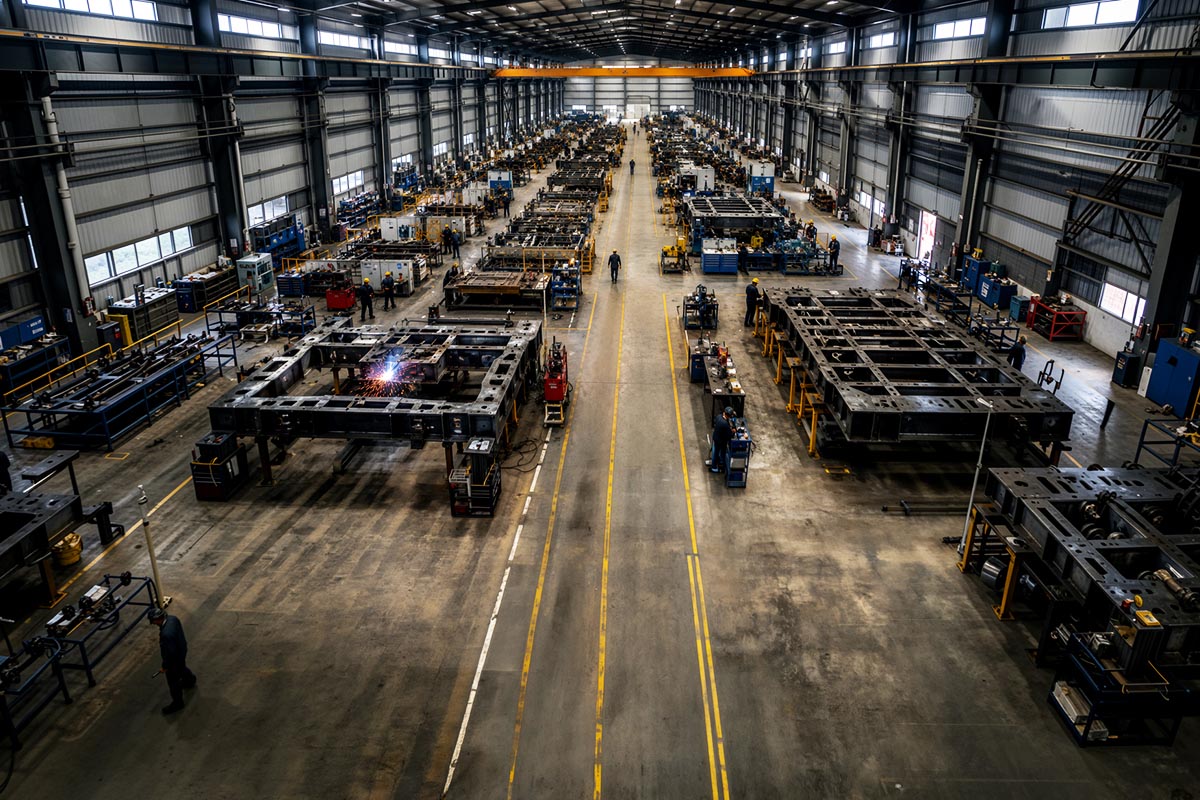
For a manufacturer, setting up a factory is only the beginning. The real challenge starts when the business grows. Production increases. More raw materials need to reach the facility. Finished goods need to move faster. Warehousing requirements expand. More employees join the workforce. Heavy vehicles are becoming more frequent. Utility requirements rise. Eventually, the infrastructure that seemed sufficient during the initial setup may begin to limit the business. This is why choosing an industrial location should involve more than asking, “Where can we build?”
The more important question is: “Where can we continue to grow?”
An industrial city in Vitthalapur offers a different approach to this question by bringing industrial infrastructure, logistics connectivity, utilities, workforce support and commercial facilities into one larger ecosystem. Mascot Industrial City, spread across 385 acres, is planned around the requirements of modern industrial operations, including heavy vehicle movement, future utility expansion and connectivity to major industrial hubs.
But for a manufacturer, the real value of such an ecosystem lies in how it can support the journey from setting up a factory to scaling the business.
Your next growth phase starts with the right industrial address.
Explore Mascot Industrial City
The Manufacturer’s Journey Does Not End at Setup
A manufacturing business typically grows in stages. First comes land acquisition and factory construction. Then production begins. Once demand increases, the business starts adding machinery, people, storage, and logistics capacity. With every stage, the pressure on infrastructure increases. A location that works for 100 employees may not work as well for 500. A road network designed for occasional truck movement may struggle with regular container traffic. Utilities sufficient for the first production line may need expansion when additional machinery is installed.
This is why Vitthalapur industrial city planning can be relevant for manufacturers looking beyond their immediate requirements. The objective is not simply to create industrial plots. It is to create infrastructure that can support businesses as their operational requirements change.
1. Start With Infrastructure That Can Handle Growth
Infrastructure is often taken for granted when a factory is being planned. But once production begins, road width, entry points, and vehicle movement can directly affect daily operations. Manufacturers may need to accommodate raw material trucks, containers, trailers, employee vehicles, and logistics partners simultaneously. As production increases, this movement only becomes more important.
Mascot Industrial City features 18-30-metre internal roads and four entry and exit points, along with approximately 1 km of frontage on a four-lane highway. The infrastructure is planned to support industrial and heavy-vehicle movement. For a growing manufacturer, this means the surrounding infrastructure is being considered as part of the operational equation. Because when production scales, movement scales with it.
2. Plan Utilities for Tomorrow’s Requirements
A factory’s utility requirements rarely remain the same throughout its lifecycle. A new manufacturing unit may start with a specific power and water requirement. Later, additional production lines, machinery, shifts, and facilities can increase that demand significantly. Retrofitting infrastructure after operations have already expanded can be complicated. A well-planned smart industrial city takes future requirements into consideration from the beginning.
Mascot Industrial City incorporates power and water infrastructure planned with future expansion in mind. This allows manufacturers to think beyond their initial setup and consider how their infrastructure requirements may evolve as production capacity increases. In other words, the goal is not simply to have enough utilities for today’s factory. It is to create a foundation that can accommodate tomorrow’s factory.
What if your industrial location could grow with your ambitions?
3. Make Factory Design Part of the Growth Strategy
A factory is more than walls, machinery, and a roof. Its design determines how efficiently materials move, where products are stored, how workers navigate the facility, and how easily additional capacity can be introduced. Poor planning at the beginning can create inefficiencies that become increasingly expensive as production grows.
This is why industrial development should consider factors such as:
- Material movement
- Storage and warehousing
- Loading and unloading
- Machinery placement
- Worker movement
- Safety requirements
- Future expansion
Mascot’s industrial services include custom factory and warehouse design, material-handling optimisation, logistics planning, safety compliance and project management. For manufacturers, this means the facility can be approached from an operational perspective rather than simply as a construction project. The better the initial planning, the easier it can be to accommodate changing production requirements.
4. Put Logistics Closer to the Manufacturing Strategy
Manufacturing growth depends heavily on logistics. Raw materials need to arrive on time. Components need to move efficiently. Finished products need to reach customers, distributors, or other facilities. That makes connectivity one of the most important considerations when selecting an industrial park in Gujarat.
Mascot Industrial City is positioned near established industrial developments, including Jetropark, Honda’s two-wheeler plant and the Maruti Suzuki plant, with access to industrial destinations such as Mandal-Becharaji SIR, Sanand GIDC and Bhagapura GIDC. The project also highlights connectivity to major road, rail, and port infrastructure, including Kandla, Mundra, and Dahej. For manufacturers, this wider network can support a more connected supply chain. The location of a factory, therefore, is not just a real estate decision. It can become a logistics decision, a supply-chain decision, and eventually a growth decision.
5. Prepare for the Workforce That Comes With Growth
A manufacturing business can only scale as efficiently as its workforce allows. As production expands, businesses may need more operators, technicians, engineers, supervisors, and support staff. But workforce availability is influenced by more than the factory itself. Where employees live, how they commute, and what facilities are available around their workplace can all affect the practicality of an industrial location. An integrated industrial city in Vitthalapur can address this by bringing residential infrastructure closer to industrial operations. Mascot Industrial City includes residential options ranging from dormitories to 1, 2, and 3-BHK residences within its broader development.
This creates a more connected work-and-live ecosystem where employees can have easier access to their workplace and everyday requirements. For manufacturers, this can become particularly valuable as the workforce grows.
From your first factory to your next milestone, location matters.
Start Your Vitthalapur Journey
6. Build an Ecosystem Around the Factory
Factories do not operate in isolation. Employees need food and everyday services. Businesses need commercial support. Visitors, vendors, and teams may require accommodation and other facilities. An integrated industrial development can bring many of these requirements closer to the workplace.
Mascot’s Vitthalapur development includes commercial components alongside its industrial and residential ecosystem, including retail and everyday support facilities. This helps create an environment where manufacturing is supported by more than just industrial land.
- For businesses, the benefit is a more complete ecosystem.
- For employees, it means everyday necessities can be closer to where they work and live.
- And for manufacturers, it can contribute to a more functional environment as operations become larger.
Traditional Industrial Plot vs Integrated Industrial City
The difference becomes clearer when viewed from a manufacturer’s perspective.
Traditional Industrial Plot | Integrated Industrial City |
Primarily focuses on factory space | Combines industrial and supporting infrastructure |
Infrastructure may meet immediate needs | Planning considers future requirements |
Logistics may need separate planning | Movement is considered at the development level |
The workforce may commute from distant locations | Residential support can be available nearby |
Limited surrounding facilities | Commercial and everyday support can be integrated |
Expansion may require additional planning | Scalability can be considered from the beginning |
Location is viewed primarily as land | Location becomes part of the business ecosystem |
This is what makes the concept of an industrial park in Vitthalapur relevant for manufacturers planning beyond their first phase. The factory remains the heart of the business. But the infrastructure around it can determine how smoothly that business grows.
Your biggest growth bottleneck could be outside your factory.
Why Vitthalapur Can Support the Next Phase of Manufacturing
Gujarat’s manufacturing ecosystem continues to develop around industrial corridors, established clusters and logistics networks. Vitthalapur sits within a wider industrial environment that includes major automotive and manufacturing developments. Mascot Industrial City is positioned close to established industrial hubs and manufacturing facilities, creating opportunities for businesses to operate within a connected industrial ecosystem.
For a manufacturer evaluating an industrial park in Gujarat, this means the assessment can go beyond the size or price of a plot.
Businesses can look at the larger picture:
- Can the location handle heavy movement?
- Can utilities support future production?
- Can employees access the workplace easily?
- Is the factory connected to suppliers and logistics networks?
- Can the surrounding ecosystem support expansion?
These questions become increasingly important when the objective is long-term growth.
Frequently Asked Questions
1. What is an industrial city in Vitthalapur?
An industrial city in Vitthalapur is a planned industrial ecosystem designed to bring manufacturing infrastructure, connectivity and supporting facilities together. Mascot Industrial City spans 385 acres and is planned around industrial operations and future growth.
2. Why should manufacturers consider an industrial park in Vitthalapur?
Manufacturers can evaluate Vitthalapur for its proximity to established industrial hubs, road connectivity, logistics networks and supporting infrastructure.
3. What should manufacturers look for in industrial infrastructure in Gujarat?
Manufacturers should consider road capacity, utilities, logistics connectivity, workforce accessibility, factory design, expansion potential and proximity to industrial clusters.
4. How can an industrial city help a manufacturing business scale?
An integrated industrial city can provide infrastructure and supporting facilities that accommodate increasing production, workforce requirements, logistics movement, and future expansion.
5. What makes Mascot Industrial City suitable for growing manufacturers?
Mascot Industrial City combines industrial infrastructure with future-oriented utilities, connectivity, workforce housing and commercial support across a 385-acre development.
Choose a Location That Grows With Your Business
The right industrial location should not only help a manufacturer start operations. It should help the business prepare for what comes next. A growing manufacturer needs infrastructure that can accommodate increasing vehicle movement, utilities that can support additional capacity, logistics connectivity that can handle larger supply chains, and an ecosystem that can support its workforce.
That is the larger proposition behind a planned industrial city in Vitthalapur.
With its 385-acre scale, heavy-vehicle-ready infrastructure, future-oriented utility planning, industrial connectivity, residential support, and commercial ecosystem, Mascot Industrial City is designed around more than the initial factory setup. Because the best industrial location is not simply the one where you can build today. It is the one that can keep up when your business gets bigger.
Your business has plans to scale. Vitthalapur has been planned around them.