

 admin
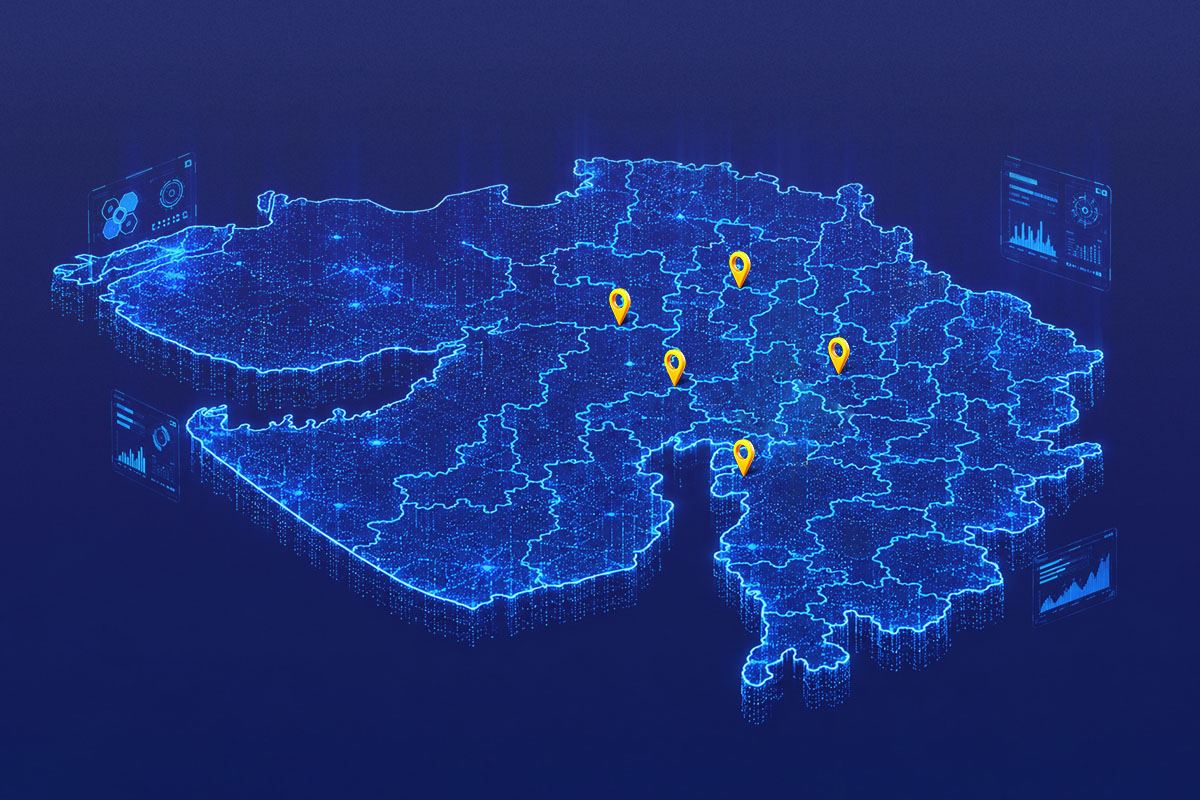
Gujarat has built one of India’s most diverse manufacturing ecosystems, with industrial activity spread across specialised clusters rather than concentrated in a single city. From automotive manufacturing around Sanand and Mandal-Becharaji-Vitthalapur to chemicals around Dahej and Vapi, engineering in Rajkot, textiles in Surat and port-led development around Mundra, each region has developed around its own industrial strengths. For businesses planning a new manufacturing, warehousing, or logistics facility, choosing an industrial park in Gujarat is therefore about much more than finding available land. Connectivity, industry clusters, supplier networks, utilities, workforce availability, and logistics access can all influence the long-term viability of a location.
Gujarat’s industrial network is extensive. The Gujarat Industrial Development Corporation (GIDC) currently lists 239 industrial estates across strategic locations in the state. Its industrial development model also includes sector-specific estates, Special Investment Regions, and other large industrial areas.
So, what makes these locations successful manufacturing hubs?
This guide explores Gujarat’s major industrial areas and the infrastructure, connectivity, and industrial ecosystems that make each region significant.
Your factory deserves more than a plot of land.
What Makes an Industrial Park in Gujarat a Manufacturing Hub?
An industrial location does not become a manufacturing hub simply because factories are built there.
The strongest locations bring several elements together: Industry clusters + connectivity + infrastructure + suppliers + workforce + logistics + room to grow
When these factors reinforce each other, they create an ecosystem where manufacturers can operate more efficiently and where new businesses have reasons to establish themselves nearby.
Industry Clusters
Industry concentration is one of the biggest advantages of established manufacturing regions. When automobile companies operate near component manufacturers, engineering companies, tooling suppliers, and logistics providers, businesses can source products and services from a connected local ecosystem.
The same principle applies to chemicals, textiles, pharmaceuticals, and engineering.
Over time, this creates a cycle: Manufacturers attract suppliers → suppliers attract more manufacturers → workforce and services develop → the cluster becomes more competitive.
Connectivity and Logistics
Manufacturing depends on movement. Raw materials need to reach factories. Components need to move between suppliers. Finished products need to reach customers, warehouses, ports and distribution centres. That makes highways, railway networks, airports, ports and freight corridors important considerations when evaluating an industrial park in Gujarat.
Infrastructure Availability
Land is only one part of the equation. Businesses also need reliable power, water, drainage, internal roads, telecommunications, waste-management systems and security. GIDC identifies infrastructure, common services, and cluster advantages among the benefits associated with its industrial estates.
This is why industrial infrastructure in Gujarat can directly influence how quickly and efficiently a manufacturing facility can become operational.
Major Industrial Areas in Gujarat
There is no universal “best” industrial location in Gujarat. Different regions have developed around different combinations of industries, infrastructure, and connectivity.
Ahmedabad-Sanand: Automotive and Engineering
The Ahmedabad-Sanand belt is one of Gujarat’s prominent manufacturing clusters. Sanand has developed around automotive, engineering, pharmaceuticals, electronics, plastics, textiles, and ancillary industries. GIDC’s Sanand-II documentation identifies automobile and ancillary industries, engineering, plastics, electronics, pharmaceuticals, and textiles among the sectors targeted for development.
One of the region’s biggest advantages is its proximity to Ahmedabad. For businesses looking for an industrial park near Ahmedabad, Sanand offers access to an established urban and industrial ecosystem while providing more space for large-scale manufacturing operations. The combination of Ahmedabad’s workforce, established suppliers, road connectivity, and industrial ecosystem has helped Sanand develop beyond a standalone industrial estate into a broader manufacturing hub.
Why Sanand continues to attract manufacturers
Businesses evaluating an industrial park in Sanand should look beyond the availability of industrial plots.
The wider ecosystem includes:
- Automobile and ancillary manufacturers
- Engineering businesses
- Industrial suppliers
- Logistics providers
- Skilled and semi-skilled workforce
- Established road infrastructure
- Access to Ahmedabad
This combination is what gives the region its manufacturing advantage.
Vadodara: Engineering, Chemicals and Manufacturing
Vadodara is one of central Gujarat’s established industrial centres. The region has significant capabilities across engineering, chemicals, pharmaceuticals and manufacturing, supported by mature industrial estates and its strategic position within Gujarat’s industrial network. Its location also connects businesses to Ahmedabad in the north and the Bharuch-Dahej industrial belt in the south. For manufacturers, this creates access to a broader supplier and service ecosystem.
Vadodara’s strength therefore lies not in one dominant sector, but in the diversity of industrial capabilities operating across the region.
Rajkot: Engineering and Component Manufacturing
Rajkot demonstrates the importance of a strong supplier ecosystem. The city and its surrounding industrial areas are associated with engineering, machine tools, auto components, casting, forging, and precision manufacturing. Its manufacturing strength has been built through a large network of small and medium-sized businesses.
For manufacturers, that can mean easier access to:
- Component suppliers
- Machine shops
- Foundries
- Tooling companies
- Fabricators
- Engineering services
- Maintenance providers
This is a classic example of the cluster effect. When specialised manufacturers operate close together, businesses can source capabilities locally instead of developing every process internally.
Surat: Textiles and Processing
Surat is one of Gujarat’s best-known manufacturing centres, particularly for textiles, textile processing and diamonds. The wider industrial ecosystem also includes chemicals, engineering, packaging and supporting businesses. The strength of Surat comes from the depth of its textile ecosystem. Manufacturers, processors, machinery suppliers, traders, packaging companies and logistics providers contribute to a network that extends far beyond individual factories.
The development of the PM MITRA Park at Vansi in Navsari further demonstrates the importance of the region’s textile ecosystem. The planned park spans approximately 1,142 acres and includes infrastructure for manufacturing, logistics, and common facilities. For businesses assessing industrial infrastructure in Gujarat, Surat and the wider South Gujarat region demonstrate how a mature industry cluster can support new industrial development.
Bharuch-Dahej: Chemicals, Petrochemicals and Port Connectivity
The Bharuch-Dahej belt is particularly important for chemicals, petrochemicals, pharmaceuticals, and related industries. Dahej’s strategic advantage comes from its combination of industrial concentration and port connectivity. GIDC’s industrial information includes Dahej, Dahej-II, and Dahej-III among the industrial estates in Bharuch district. For process industries, this combination can be particularly valuable because large volumes of raw materials and finished products may need to move through the supply chain.
The region therefore demonstrates how an industrial estate in Gujarat can evolve into a much larger ecosystem when specialised industries, logistics and infrastructure develop around it.
Still deciding where to set up in Gujarat?
Vapi: A Mature South Gujarat Industrial Cluster
Vapi is another established industrial location in Gujarat. The region is associated with chemicals, pharmaceuticals, paper, textiles and engineering-related activities. Its advantage lies partly in the maturity of its manufacturing ecosystem. Businesses operating in established industrial areas can benefit from existing suppliers, contractors, technical workers, maintenance providers and supporting services. This ecosystem can be difficult to recreate from scratch.
For companies comparing an industrial estate in Gujarat, locations with established supplier networks can therefore offer advantages beyond the initial cost of land.
Kutch-Mundra: Port-Led Manufacturing and Logistics
Kutch-Mundra represents another model of industrial growth. Instead of being driven primarily by proximity to a major urban centre, the region’s industrial development is strongly connected to port and logistics infrastructure.
Mundra’s maritime connectivity makes the wider region relevant for businesses involved in:
- Export-oriented manufacturing
- Import-intensive production
- Warehousing
- Distribution
- Logistics
- Large-scale industrial operations
The model is straightforward: Port → logistics → warehousing → manufacturing → distribution
For companies where freight movement is a major operational consideration, this can be a significant location advantage. It also highlights why an industrial and logistics park in Gujarat can be valuable for businesses that need manufacturing and supply-chain functions to operate within a connected ecosystem.
Kadi: Manufacturing and Logistics on a Growing Corridor
Kadi is strategically positioned along the Kadi-Vitthalapur corridor and benefits from its proximity to Ahmedabad, Mehsana, and other northern Gujarat manufacturing locations. The region is increasingly relevant for businesses looking for manufacturing, warehousing, and logistics facilities outside the immediate Ahmedabad urban area. This makes Kadi particularly interesting for businesses searching for an industrial park near Ahmedabad while also looking for larger development opportunities.GIDC lists Kadi among its industrial locations, while private developments are also expanding manufacturing and logistics capacity along the corridor.
For example, Mascot Industrial Park at Kadi spans 85 acres and is planned for manufacturing, warehousing, and logistics operations, with facilities including internal roads, utilities, security, water treatment, common sewage treatment, and workforce-oriented amenities.
Kheda: Connecting Ahmedabad With Central Gujarat
Kheda occupies a strategic position between Ahmedabad and central Gujarat. Its location provides access to Ahmedabad’s commercial and workforce ecosystem while also connecting businesses to other manufacturing regions. This makes Kheda relevant for manufacturing, warehousing, and logistics development. It also reflects a broader shift in Gujarat’s industrial geography.
As established urban areas become increasingly constrained by land availability, industrial development is moving toward peripheral locations where larger, planned developments can offer better opportunities for expansion. For businesses assessing industrial infrastructure in Gujarat, these emerging corridors deserve attention because their value is closely connected to future connectivity and industrial development.
Mandal-Becharaji-Vitthalapur: Automotive and Engineering Growth
The Mandal-Becharaji-Vitthalapur belt is an important part of Gujarat’s automotive and engineering ecosystem. Its relationship with the Sanand manufacturing cluster, combined with large-scale industrial development, makes the region relevant to automobile manufacturers, component suppliers, and engineering businesses. GIDC’s industrial development around Mandal includes Japanese Industrial Zone phases, highlighting the region’s role in specialised industrial development. Vitthalapur is also seeing integrated industrial development.
Mascot Industrial City in Vitthalapur spans 385 acres, with wide internal roads, multiple access points, utilities, and supporting facilities designed for industrial operations. The development illustrates the changing expectations of manufacturers. Businesses increasingly need more than a plot. They need an ecosystem that supports production, logistics, workforce requirements, utilities, and future expansion.
Industrial Estate in Gujarat vs Industrial Park: What’s the Difference?
The terms industrial estate and industrial park are often used interchangeably, but businesses should evaluate what a development actually provides rather than relying on the label. An industrial estate in Gujarat generally refers to a designated area developed for industrial activity with supporting infrastructure and facilities.
A modern industrial park can take a broader approach by combining:
- Industrial plots
- Internal roads
- Utilities
- Logistics facilities
- Common infrastructure
- Security
- Workforce amenities
- Warehousing
- Expansion opportunities
The exact facilities vary from one development to another.
Why Industrial Infrastructure in Gujarat Matters
The infrastructure surrounding a factory can directly influence its daily operations. Consider two sites with similar plot sizes. One may require the business to independently arrange roads, utilities, security, waste management, and workforce facilities. Another may already provide planned infrastructure and common facilities. The difference can affect setup time, operating complexity, and long-term efficiency.
This is why industrial infrastructure in Gujarat should be considered alongside land cost when comparing locations.
Businesses should evaluate:
- Power: Is the available power capacity sufficient for current and future production?
- Water: Is there a reliable water supply suitable for the intended industrial activity?
- Roads: Can heavy vehicles and logistics trucks move efficiently within and around the development?
- Waste Management: Are drainage, sewage, and industrial waste-management systems appropriate for the business?
- Security: Are access control and surveillance systems adequately planned?
- Workforce Facilities: Can employees access transport, accommodation, healthcare and other essential services?
- Expansion: Can the business increase its footprint without having to relocate?
A well-planned industrial ecosystem can address several of these requirements from the outset.
Industrial and Logistics Parks Are Changing Manufacturing Locations
Manufacturing and logistics are becoming increasingly interconnected. A factory may need warehousing next door. A distributor may need direct highway access. An exporter may need proximity to a port. A manufacturer may require suppliers within the same industrial ecosystem. This is driving interest in integrated developments rather than isolated factory plots. An industrial and logistics park in Gujarat can bring manufacturing, warehousing, transportation infrastructure, and supporting facilities closer together.
The objective is not simply to provide more industrial space. It is to reduce the operational distance between the different parts of a business’s supply chain.
Which Industrial Area Is Right for Your Business?
There is no single answer because different industries have different location requirements.
Business Requirement | Regions Worth Evaluating |
Automotive manufacturing | Sanand, Mandal-Becharaji-Vitthalapur |
Auto components | Sanand, Rajkot, Mandal-Becharaji-Vitthalapur |
Engineering and machinery | Rajkot, Vadodara, Kadi, Sanand |
Chemicals and petrochemicals | Bharuch-Dahej, Vapi, Vadodara |
Pharmaceuticals | Sanand, Vadodara, Bharuch-Dahej, Vapi |
Textiles | Surat and wider South Gujarat |
Export-oriented manufacturing | Kutch-Mundra, Dahej |
Warehousing and logistics | Kadi, Kheda, Sanand, Mundra |
Ahmedabad proximity | Sanand, Kadi, Kheda |
Large-scale industrial development | Sanand, Vitthalapur, Kutch |
Businesses looking for an industrial park near Ahmedabad may prioritise Sanand, Kadi or Kheda, while companies with port-dependent supply chains may place greater importance on Dahej or Mundra. The right decision ultimately depends on industry compatibility, logistics, workforce, infrastructure, suppliers, and expansion potential.
How to Evaluate an Industrial Park in Gujarat
Before selecting an industrial location, businesses should evaluate the entire operating ecosystem.
- Industry Compatibility: Does the location already support your industry or related sectors?
- Connectivity: How easily can raw materials, employees, suppliers, and finished goods reach the facility?
- Supplier Ecosystem: Are component manufacturers, fabricators, maintenance providers, and logistics companies nearby?
- Infrastructure: Are power, water, roads, drainage, telecommunications, waste management, and security adequately planned?
- Workforce: Can the location provide access to the skilled and semi-skilled workforce your business requires?
- Expansion Potential: Can the facility grow as production increases?
- Total Operating Cost: Do not compare locations based only on land price.
- Consider: Land + infrastructure + transportation + utilities + workforce + logistics + expansion
A location that appears more expensive initially may prove more efficient over the long term if the surrounding ecosystem reduces operational friction.
How Mascot Fits Into Gujarat’s Industrial Growth
The evolution of Gujarat’s industrial landscape is creating demand for developments that combine industrial space with supporting infrastructure and logistics.
Mascot Infra has industrial developments across several Gujarat growth locations, including Sanand, Kadi, Kheda, Surat, and Vitthalapur. Its Sanand development is a 50-acre industrial and logistics park positioned near Sanand GIDC, with access to the GIDC road network and NH-47. The development includes internal roads, power, water treatment, security, a weighbridge, common sewage treatment, medical facilities, and workforce amenities. This makes it relevant for businesses evaluating an industrial park in Sanand as part of the wider Ahmedabad manufacturing ecosystem.
At Kadi, Mascot Industrial Park covers 85 acres and is positioned along the Kadi-Vitthalapur corridor for manufacturing, warehousing and logistics operations.
At Vitthalapur, Mascot Industrial City covers 385 acres and is designed around the requirements of larger industrial operations.
Across these developments, the focus is not simply on industrial land. It is on creating environments where businesses can set up, operate, and scale.
Frequently Asked Questions
1. What is an industrial park in Gujarat?
An industrial park in Gujarat is a planned industrial development that provides businesses with industrial space and supporting infrastructure. Depending on the development, facilities can include internal roads, utilities, security, logistics infrastructure, common services, and workforce amenities.
2. What are the major industrial areas in Gujarat?
Major industrial regions include Ahmedabad-Sanand, Vadodara, Rajkot, Surat, Bharuch-Dahej, Vapi, Kutch-Mundra, Kadi, Kheda and Mandal-Becharaji-Vitthalapur. Each has developed around different industry clusters and infrastructure advantages.
3. What is an industrial estate in Gujarat?
An industrial estate in Gujarat is a designated area developed for industrial businesses, generally with supporting infrastructure and common facilities. GIDC operates industrial estates across numerous locations and sectors in Gujarat.
4. Why is industrial infrastructure in Gujarat important?
Industrial infrastructure in Gujarat provides the physical systems businesses need to operate, including roads, power, water, drainage, waste-management facilities, telecommunications, and other supporting services. Infrastructure quality can influence both setup and long-term operating efficiency.
5. What should I look for in an industrial park near Ahmedabad?
When evaluating an industrial park near Ahmedabad, businesses should consider highway connectivity, proximity to suppliers, workforce access, utilities, logistics, industrial neighbours, and future expansion opportunities. Sanand, Kadi, and Kheda are among the locations worth evaluating.
Conclusion
Gujarat’s industrial strength comes from the diversity and interconnectedness of its manufacturing regions. Sanand and Mandal-Becharaji-Vitthalapur have developed strong automotive and engineering ecosystems. Rajkot is known for its engineering and supplier network, while Surat has built a powerful textile cluster. Bharuch-Dahej and Vapi support chemicals and process industries, while Kutch-Mundra demonstrates the value of port-led industrial development. Kadi and Kheda represent the expansion of manufacturing into strategically connected corridors around established centres. Across all these regions, the same principle applies: Land starts the conversation. Infrastructure and ecosystem determine what happens next.
For businesses considering an industrial park in Gujarat, the decision should therefore go beyond plot size and land price. Connectivity, suppliers, utilities, workforce, logistics, and expansion potential can ultimately determine whether a location simply houses a factory or helps build a business ecosystem.
The right location can change your entire supply chain.