

 admin
admin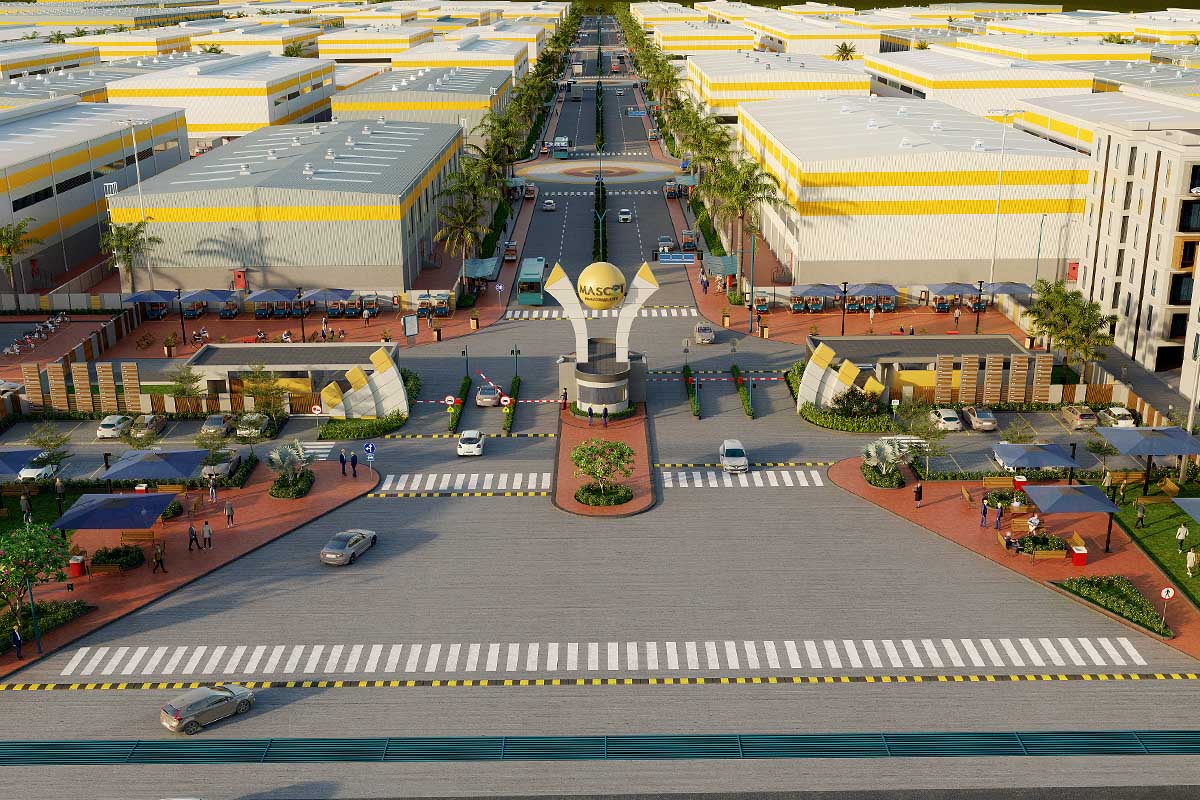
For years, sustainable industrial development has been associated with solar panels, landscaped spaces, and other visible green features. But for businesses, the bigger question is simpler: does the infrastructure make everyday operations more efficient?
A sustainable industrial park should do more than reduce environmental impact. It should help goods move smoothly, support reliable utilities, improve safety, reduce unnecessary travel, and create an ecosystem that can keep pace with future growth. That is where the idea of a modern smart industrial city becomes more practical. Sustainability is not separate from operational efficiency. The two increasingly need to work together.
For an emerging industrial city in Vitthalapur, this shift is particularly relevant. Mascot Industrial City Vitthalapur has been planned as a 385-acre industrial ecosystem with infrastructure designed around movement, connectivity, utilities, sustainable mobility and long-term scalability. It reflects a broader approach to sustainable industrial development in Gujarat, where industrial planning increasingly needs to balance business efficiency with responsible infrastructure.
Put your business where infrastructure works smarter.
Explore Mascot Industrial City
Sustainability Should Improve Industrial Operations
An industrial park may have environmentally conscious features, but daily operations can still become inefficient if trucks face congestion, utilities are poorly planned, or businesses must create essential support systems independently.
That is why the conversation around industrial infrastructure in Gujarat needs to move beyond individual green additions. Modern industrial infrastructure in Gujarat needs to support productivity, logistics, resource efficiency and the long-term requirements of businesses.
Practical sustainability is built into the way an industrial ecosystem functions. It can mean:
- Better movement for people and goods.
- Well-planned shared infrastructure and utilities.
- Safer and more organised operations.
- Stronger logistics connectivity.
- Sustainable mobility options.
- Infrastructure designed for future expansion.
When these elements are planned together, sustainability becomes something businesses experience every day rather than simply something they see.
Why Movement and Logistics Matter in Industrial Infrastructure
Every delayed vehicle, congested road, or poorly planned entry point can affect an industrial operation. Small inefficiencies can add up through longer turnaround times, disrupted logistics and avoidable operational friction. This makes movement a critical part of Vitthalapur industrial city planning. In a modern smart industrial city, road width, entry points, and internal circulation need to be considered alongside the industrial plots themselves. Road networks, entry points, and highway access are not just infrastructure specifications. They influence how efficiently raw materials enter, how finished goods move out, and how easily an industrial ecosystem can handle growth.
Better movement can support more predictable operations and smoother logistics. In a sustainable industrial ecosystem, efficiency starts with designing infrastructure around how industries actually function.
The right industrial location can change everything.
Shared Infrastructure Can Improve Long-Term Efficiency
When every industrial unit must independently address the same infrastructure requirements, resources can become fragmented, and development can become less coordinated. A well-planned sustainable industrial park in Gujarat can take a more integrated approach by considering roads, utilities, mobility, and support infrastructure as part of a larger ecosystem. This makes a sustainable industrial park in Gujarat more practical for businesses seeking operational efficiency alongside responsible development. The objective is not simply to offer industrial land. It is to create an environment where businesses have a stronger infrastructure foundation from the beginning and can focus more on operations and growth.
This is also what gives the idea of a smart industrial city real value. Technology and sustainability matter, but they need to solve practical operational challenges. A smart industrial city should ultimately make everyday industrial activity more connected, organised and efficient.
Safety, Workforce Support and Operational Continuity
Industrial infrastructure is about more than plots, roads, and power connections. The people who keep an industrial ecosystem running are equally important. Workforce accessibility, safe movement, daily convenience, and supporting facilities can all influence long-term operational efficiency. A thoughtfully planned industrial city in Vitthalapur, therefore, has the potential to bring industries, workforce needs, and supporting infrastructure into one larger ecosystem.
The result is a more connected approach to industrial development, where infrastructure is planned not only around today’s requirements but around the needs of a growing industrial community.
Don’t just buy industrial space. Build for what’s next.
Connectivity Is Part of Infrastructure Efficiency
An industrial location does not operate in isolation. Its value is closely connected to how efficiently it links with highways, manufacturing clusters, suppliers, markets, and logistics networks. For this reason, strong connectivity is a major part of industrial infrastructure in Gujarat and an important consideration when evaluating a sustainable industrial park in Gujarat. For businesses, the movement of raw materials and finished products can be influenced long before a vehicle reaches the factory gate. Strategic location and access to major transport corridors can help create a more efficient logistics environment.
This is why location planning and infrastructure planning need to work together.
What Makes a Sustainable Industrial Park Truly Efficient?
A sustainable industrial park is not defined by one feature. It is shaped by how well different parts of the ecosystem work together.
The real questions businesses should ask include:
- Can heavy vehicles move efficiently within the development?
- Is the road network designed for industrial traffic?
- Are utilities prepared for current operations and future growth?
- Does the location support smoother logistics?
- Are sustainable mobility solutions integrated into the larger plan?
- Does the ecosystem consider the needs of the workforce as well as the industry?
When infrastructure can answer these questions effectively, green industrial development becomes more practical. This is how green industrial development in Gujarat can create value beyond visible environmental features by supporting better industrial operations. Solar lighting and other sustainable features still matter. But their value increases when they are part of a larger system designed to improve movement, resource use, and long-term operational efficiency.
Your next growth story starts with better infrastructure.
Explore Mascot Industrial City
How Mascot Industrial City Vitthalapur Puts Efficiency Into Infrastructure
This is where the discussion becomes more than a generic list of sustainability benefits. Mascot Industrial City Vitthalapur has been planned as a 385-acre industrial ecosystem in Gujarat, with infrastructure features that connect sustainability with day-to-day operational efficiency.
Wide Internal Roads for Industrial Movement
The project includes an 18-30 metre internal road network designed to support the movement of containers, trailers and other heavy vehicles. For industries and logistics operations, better internal circulation can help reduce congestion and support smoother movement across the development.
Four Dedicated Entry and Exit Points
Multiple entry and exit points can help distribute traffic and improve access across a large industrial ecosystem. At Mascot Industrial City Vitthalapur, four dedicated entry and exit points are part of the project’s planning approach.
Approximately 1 km of Highway Frontage
The project has approximately 1 km of frontage on a 4-lane highway, adding another layer to its logistics advantage. Stronger access to the surrounding road network can support more efficient movement between the industrial city and key manufacturing and business hubs.
Utilities Designed for Growth
Robust power and water systems with provision for future expansion form part of the infrastructure plan. For growing businesses, infrastructure that anticipates future requirements can reduce the need for fragmented solutions later.
Sustainable Mobility and Lower-Impact Infrastructure
EV charging stations, e-shuttle connectivity, and solar street lighting bring sustainable mobility and infrastructure efficiency into the larger industrial city plan. Here, green industrial development is not treated as an isolated feature but as one part of a broader operational ecosystem.
Together, these elements show what efficiency-led Vitthalapur industrial city planning can look like: infrastructure designed around movement, scalability, connectivity and long-term usability. They also demonstrate how an industrial city in Vitthalapur can combine sustainable infrastructure with the practical requirements of modern industry.
Why settle for land when you can invest in an ecosystem?
Discover Mascot Industrial City
The Future of Smart Industrial Cities Is Operational Efficiency
The next generation of industrial development will be judged by more than land availability or a list of amenities. Businesses will increasingly evaluate whether an industrial ecosystem can help them operate efficiently today and scale with confidence tomorrow.
That means looking at:
- Internal and external connectivity
- Movement of heavy vehicles and goods
- Reliable utilities
- Workforce support
- Safety and organised infrastructure
- Sustainable mobility
- Capacity for future growth
These factors are shaping the evolution of the smart industrial city and the next generation of industrial infrastructure in Gujarat. For Mascot Industrial City Vitthalapur, the focus is not simply on creating industrial plots. The larger vision is to develop an ecosystem where infrastructure and sustainability support the way modern industries operate.
Efficiency Is Becoming the Real Measure of Sustainability
The future of sustainable industrial development is not about adding more green features to a project brochure.
It is about asking a more meaningful question:
Does the infrastructure help businesses operate better?
When roads improve movement, connectivity supports logistics, utilities are planned for growth, and sustainable solutions are integrated into everyday operations, sustainability starts delivering practical business value. That is why efficient infrastructure is becoming an important benchmark for the future of sustainable industrial parks in Gujarat. For businesses comparing industrial locations, the quality of industrial infrastructure in Gujarat can increasingly influence operational efficiency, logistics, and long-term growth.
And for businesses looking at an industrial city in Vitthalapur, the opportunity is bigger than finding land. It is about becoming part of an ecosystem where infrastructure, sustainability and long-term efficiency are planned to work together.
Choose an industrial ecosystem built for smoother operations and future growth.