

 admin
admin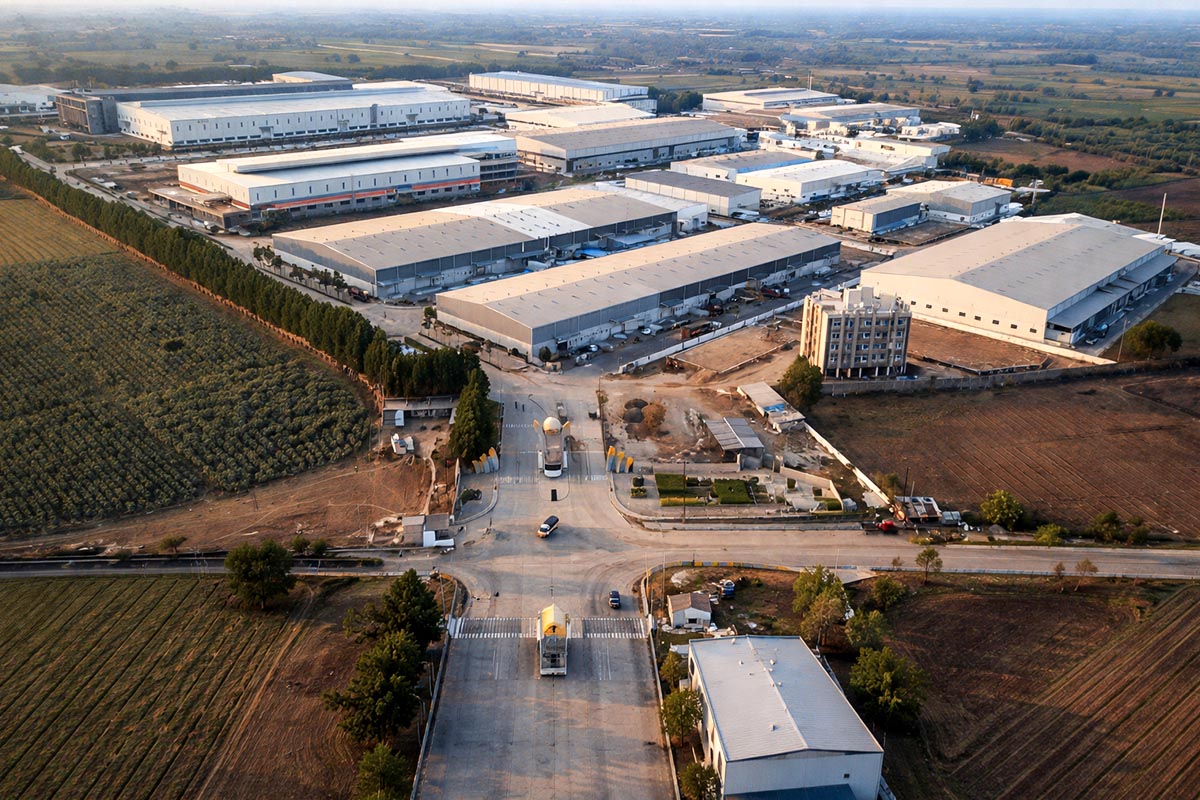
Ahmedabad’s industrial landscape is changing. Businesses are no longer evaluating industrial locations based only on how much land they can acquire. Increasingly, they are looking at connectivity, infrastructure, utilities, workforce support, and long-term operating efficiency before choosing where to establish their next facility.
This is driving growing interest in planned industrial parks near Ahmedabad. From Sanand and Changodar to Bavla, Kheda and Bagodara, the industrial ecosystem around Ahmedabad is expanding across connected corridors. Established areas such as Naroda and Vatva GIDC continue to play an important role, while emerging industrial destinations are creating new opportunities for manufacturing, warehousing, engineering and logistics businesses.
The shift is significant: industrial development is moving from simply finding land to finding an environment where businesses can operate efficiently.
Why settle for land when you need an ecosystem?
Why Ahmedabad’s Industrial Growth Is Spreading Outward
Ahmedabad remains one of Gujarat’s major commercial and industrial centres. But businesses do not necessarily need to be located within the city to remain connected to its workforce, markets, and business ecosystem. The surrounding industrial belt offers access to major roads, established industrial clusters, and logistics networks while providing greater scope for organised industrial development. Sanand is a particularly strong example. GIDC describes Sanand-II as a major industrial estate located around 25-30 km from Ahmedabad, with infrastructure developed for industries including automobile and ancillary, engineering, plastics, electronics, pharma, and textiles.
This broader ecosystem is making locations around Ahmedabad increasingly relevant for companies looking at their next manufacturing, warehouse, or logistics facility.
The Question Is No Longer Just “Where Is the Land?”
For years, industrial property decisions often started with a straightforward question: How much industrial land do we need? Today, the question is becoming more operational: What does the location provide beyond the land itself? A company setting up an industrial facility needs more than a plot boundary. It needs roads for material movement, reliable utilities, security, access for employees and vendors, and connectivity to markets and transport corridors. This is where planned industrial parks can offer an advantage.
Instead of developing every supporting requirement independently, businesses can choose an industrial environment where several of these elements are planned together.
Is Sanand your business’s next move?
Explore Mascot’s Sanand Project
Standalone Industrial Plot vs Planned Industrial Park
The difference becomes clearer when the two approaches are compared.
Standalone Industrial Plot | Planned Industrial Park |
Infrastructure may require separate planning | Internal infrastructure is planned as part of the development |
Utilities need individual coordination | Utility infrastructure can be organised within the park |
Security arrangements may need to be developed separately | Integrated security can support the overall development |
Workforce facilities may need separate arrangements | Facilities can include workforce-oriented amenities |
Internal movement depends on individual site planning | Planned internal roads support movement |
Businesses manage more supporting requirements independently | Multiple operational requirements can be brought together |
This does not mean every business needs a planned industrial park. But for companies focused on operational efficiency and long-term scalability, the ecosystem surrounding a facility can be as important as the facility itself.
Why Connectivity Matters More Than Ever
Industrial businesses depend on movement. Raw materials have to reach factories. Components need to move between suppliers and manufacturers. Finished products need to travel to distributors, warehouses, markets, and ports. That makes road and freight connectivity an important part of industrial location planning.
The Ahmedabad region benefits from access to major highways and industrial corridors, while Gujarat’s wider freight network connects manufacturing centres with important ports and markets. Sanand’s industrial ecosystem is a good example of how location can support this model. GIDC highlights its proximity to Ahmedabad and connectivity to major ports, while industrial developments in the area are positioned around highway access and established industrial infrastructure.
For businesses, this can translate into more predictable movement of people, materials, and finished goods.
More than space. Built for business.
Explore Mascot’s Industrial Park
Why Sanand Is Becoming an Important Industrial Destination
Among the industrial locations surrounding Ahmedabad, Sanand has developed a particularly strong manufacturing ecosystem. Its proximity to Ahmedabad, established industrial infrastructure, and presence of major manufacturing businesses have made the region increasingly relevant to companies across automotive, engineering, electronics, FMCG, logistics, and allied sectors. The development of organised industrial and logistics parks is adding another layer to this ecosystem. Instead of businesses looking only for industrial land in Sanand for sale, the conversation is increasingly about what kind of industrial environment they can operate in.
That distinction matters.
A location with access to suppliers, workers, transport networks, and supporting infrastructure can potentially reduce the friction involved in day-to-day industrial operations.
What Makes a Planned Industrial Park More Business-Friendly?
A modern industrial park can bring together several practical requirements that businesses need every day.
Internal Roads
Large industrial facilities depend on the smooth movement of trucks, raw materials, and finished goods. Properly planned internal roads can make movement more organised and efficient.
Utilities
Power, water, telecommunications, drainage, and other utilities are essential to industrial operations. Planning these requirements at the development level can make infrastructure management more structured.
Security
Industrial facilities handle valuable machinery, inventory, vehicles, and materials. Security infrastructure, therefore, becomes an important consideration when choosing an industrial location.
Workforce Facilities
Industrial operations depend on people as much as machinery. Facilities such as canteens, dormitories, and medical support can make an industrial development more practical for businesses with a sizeable workforce.
Room to Scale
Businesses rarely remain static. A location that can support expansion and changing operational requirements can be more valuable than a site chosen only for its current space requirement.
Beyond the plot lies your next growth opportunity.
Mascot Industrial & Logistics Park: A Sanand Example
The shift toward planned industrial environments can be seen in Mascot Industrial & Logistics Park near Sanand. Located at Kunvar Village adjacent to Sanand GIDC, the development covers 50 acres and has been planned for manufacturing and allied industrial operations. It has access from the GIDC 16-metre road and connectivity to NH-47, with Ahmedabad and major ports accessible through the wider road network.
The development also includes infrastructure and supporting facilities such as:
- Internal road network
- Utility infrastructure
- Security measures
- Water treatment facilities
- Weigh bridge
- Emergency entry and exits
- Power infrastructure
- Common sewage treatment plant
- Medical centre
- Dormitory facilities
- Canteen facilities
The significance is not simply that businesses can find an industrial plot near Ahmedabad here. It is that the industrial environment has been planned around the practical requirements of operating a business.
Why Workforce Infrastructure Deserves More Attention
Industrial location discussions often focus heavily on highways, land prices, and connectivity. But there is another factor that directly affects operations: people. Manufacturing and logistics businesses need operators, technicians, supervisors, support staff, and other workers. If basic workforce requirements are difficult to manage, even a strategically located facility can face operational challenges. This is why facilities such as dormitories, canteens, and medical centres can become meaningful advantages within an industrial park. Mascot’s Sanand development, for example, includes these facilities alongside its core industrial infrastructure.
It reflects a broader change in industrial planning: the focus is shifting from constructing industrial buildings to creating environments that support the people and processes inside them.
Your next facility deserves a smarter setting.
What Businesses Should Look For in an Industrial Park Near Ahmedabad
Before choosing an industrial location, businesses should look beyond the size of the available property.
A practical evaluation should include:
- Connectivity
How easily can trucks, employees, suppliers, and customers reach the facility?
- Industrial ecosystem
Are established manufacturers, suppliers, and allied businesses already operating nearby?
- Infrastructure
Are roads, power, water, drainage, and other essential services properly planned?
- Workforce support
Are there facilities that make the location practical for employees and workers?
- Security and emergency access
Does the development have appropriate security and emergency movement provisions?
- Scalability
Can the location accommodate future business growth?
- Ahmedabad accessibility
How easily can management, vendors, employees, and customers access the city?
These factors can be more valuable for long-term operations than simply comparing the size of two industrial plots.
Frequently Asked Questions
1. Why are businesses choosing industrial parks near Ahmedabad?
Businesses are increasingly looking for more than industrial land. Planned industrial parks can bring together connectivity, internal roads, utilities, security and workforce facilities, creating a more organised environment for industrial operations.
2. Why is Sanand important for industrial businesses?
Sanand is close to Ahmedabad and has an established industrial ecosystem supported by manufacturing activity and industrial infrastructure. GIDC identifies Sanand-II as a major industrial estate with sectors including automobiles, engineering, electronics, pharma, and plastics.
3. What is the advantage of a planned industrial park over an industrial plot?
A planned industrial park can provide shared or integrated infrastructure and supporting facilities, reducing the need for businesses to coordinate every requirement independently.
4. What should businesses consider before choosing an industrial park near Ahmedabad?
Businesses should evaluate connectivity, industrial ecosystem, utilities, internal roads, security, workforce facilities, emergency access, and future scalability rather than looking at land size alone.
5. Is Sanand suitable for manufacturing and logistics businesses?
Sanand has an established industrial ecosystem and strong connectivity to Ahmedabad and wider transport networks. Industrial parks in the area cater to manufacturing, warehousing, logistics, and allied industrial operations.
The Bigger Shift in Ahmedabad’s Industrial Market
The rise of planned industrial parks points toward a broader change in how businesses are approaching industrial real estate.
The decision is gradually moving from:
Land → Building → Operations
to:
Location → Infrastructure → Connectivity → Operations → Growth
That is why terms such as industrial park near Ahmedabad, industrial park in Sanand, and industrial shed for sale near Ahmedabad are increasingly connected to a larger conversation about industrial ecosystems rather than property alone. Ahmedabad’s surrounding industrial corridors are becoming more organised, connected and business-oriented.
Sanand is one of the clearest examples of this transformation, with an established industrial base, proximity to Ahmedabad, and continued development of industrial and logistics infrastructure. For businesses planning their next manufacturing, warehousing, or logistics facility, the future may therefore not be about finding the cheapest or largest piece of land.
It may be about finding the right industrial ecosystem. And that is exactly why planned industrial parks near Ahmedabad are becoming an increasingly important choice for modern businesses.
Where should your next industrial chapter begin?