

 admin
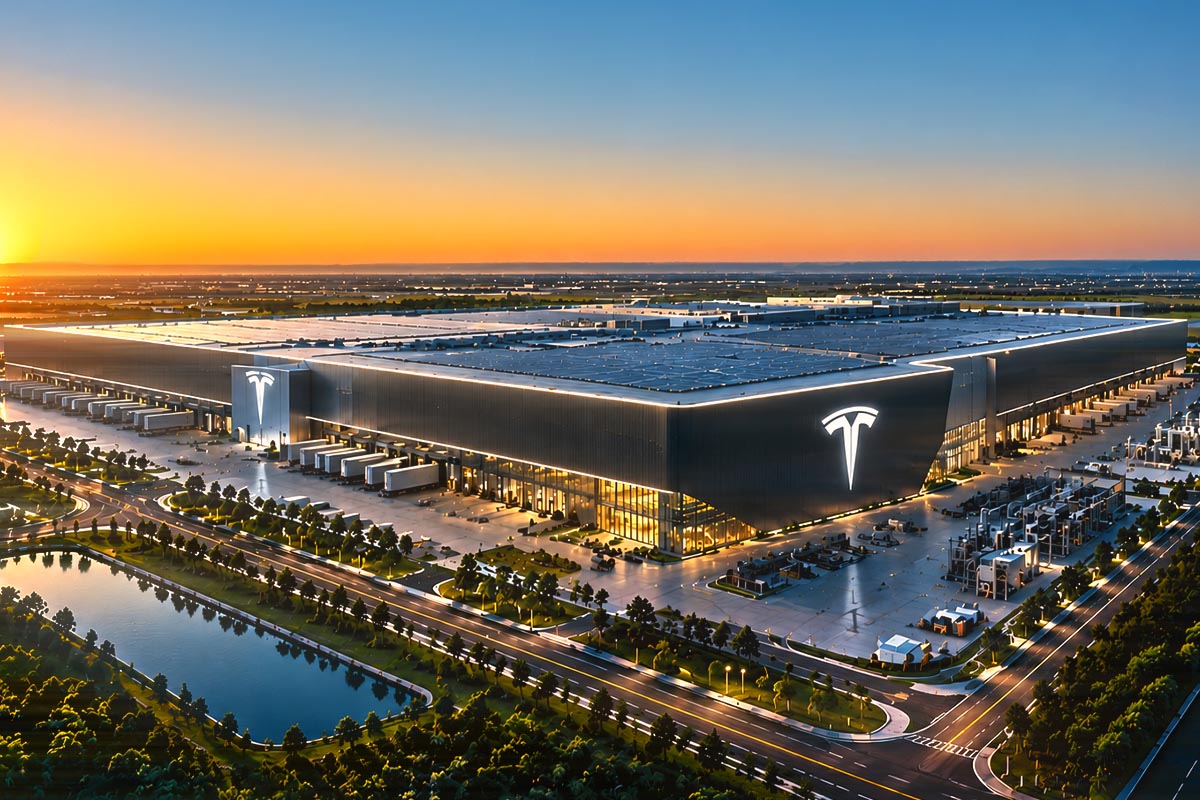
A factory is no longer just a building where products are made. As manufacturing becomes more complex, businesses need much more around the production floor: reliable power, efficient logistics, supplier networks, workforce support, room for expansion, and infrastructure that can adapt to changing requirements.
Tesla’s Gigafactories offer a useful example of this evolution. Tesla’s manufacturing network now spans more than 30 million sq. ft. of factory space across three continents, with facilities producing vehicles, batteries, energy products, and other components. Its Gigafactory Texas alone covers 2,500 acres with more than 10 million sq. ft. of factory floor.
But the bigger story is not Tesla.
It is how manufacturing infrastructure is changing globally from standalone factories to integrated industrial ecosystems.
Your next factory needs more than four walls. It needs the right ecosystem.
The Factory Is Becoming Part of a Larger Ecosystem
A manufacturing facility depends on roads for movement, utilities for production, logistics networks for distribution, suppliers for materials, and people for operations. When these elements are disconnected, businesses may have to build or coordinate each requirement separately.
An integrated industrial environment approaches these needs together.
This is the thinking behind the evolution of the modern industrial park, and it is increasingly relevant to industrial infrastructure in Gujarat, where manufacturing, automotive, engineering, and logistics clusters continue to expand.
What Tesla’s Gigafactories Reveal About Modern Manufacturing
Tesla describes its factories as purpose-built facilities designed around evolving manufacturing requirements. Its manufacturing network includes specialised facilities for vehicles, batteries, powertrains and energy storage. Gigafactory Nevada, for example, produces electric motors, powertrains, vehicle batteries and energy-storage products, while Tesla continues to expand the site with additional manufacturing capacity.
The lesson for industrial infrastructure is significant.
Manufacturing capacity cannot be planned independently of the infrastructure that supports it. As production scales, the surrounding ecosystem needs to scale with it. That means industrial development must increasingly account for connectivity, utilities, logistics, sustainability, and expansion from the beginning.
The smartest manufacturing move might start before construction does.
- Scalability Is Becoming a Core Infrastructure Requirement
Manufacturing businesses rarely remain the same size throughout their lifecycle. A company may begin with one facility and later add production lines, warehouses, new technologies, or additional capacity. If the surrounding infrastructure cannot support that growth, expansion can become slower and more expensive.
Future-ready industrial infrastructure therefore needs to consider:
- Internal road capacity
- Power and water availability
- Future utility requirements
- Efficient heavy-vehicle movement
- Space for expansion
- Logistics connectivity
- Supporting workforce infrastructure
Mascot Industrial City in Vitthalapur demonstrates this approach at scale. The 385-acre development includes 18-30 metre internal roads, four dedicated entry and exit points, robust power and water systems designed for future expansion, and sustainable mobility features including EV charging and e-shuttle connectivity.
- Logistics Is Now Part of the Manufacturing Advantage
A factory can be highly efficient internally and still face operational challenges if materials and finished products cannot move efficiently. That makes logistics infrastructure a core part of industrial planning. Road connectivity, access to industrial corridors, proximity to suppliers, and connections to ports and markets can directly influence the practicality of a manufacturing location. This is especially relevant when evaluating an industrial and logistics park in Gujarat.
Mascot Industrial & Logistics Park near Sanand is located adjacent to Sanand GIDC, with access through the GIDC road network and NH-47. The 50-acre development is planned for manufacturing, warehousing, and allied industrial operations and includes internal roads, power, water treatment, telecom connectivity, security, a common sewage treatment plant, and other support infrastructure.
Here, location and infrastructure work together. The result is not simply industrial land with road access, but an environment planned around how businesses actually operate.
Don’t let infrastructure become the bottleneck to your next big move.
- Reliable Utilities Need to Be Planned From the Start
Manufacturing depends on dependable utilities. Power, water, drainage, sewage treatment, and telecommunications are not secondary conveniences. They are fundamental to daily operations. This is also where the plug-and-play model in infrastructure becomes increasingly relevant.
Gujarat Industrial Development Corporation (GIDC) already provides plug-and-play facilities across its industrial estates, including roads, water and drainage, gas and power infrastructure, sewage and effluent treatment, telecom connectivity, and other supporting facilities. At the national level, the Government of India approved the BHAVYA scheme in 2026 to support 100 investment-ready plug-and-play industrial parks, with a focus on infrastructure, utilities, multimodal logistics and worker-support systems.
This signals a broader change: The faster businesses can move from land acquisition to operational readiness, the more valuable the industrial ecosystem becomes.
- Supply Chains Are Driving the Rise of Industrial Clusters
Modern manufacturing is rarely a one-company operation. Automotive manufacturers need component suppliers. Electronics businesses need specialised vendors. Warehouses need logistics partners. Large production facilities need maintenance, engineering, transportation, and support services. This creates a strong case for industrial clusters where multiple businesses can operate within a connected ecosystem. For industrial park developers in India, this means the value of a project is increasingly determined by more than its acreage.
Connectivity to established industries, access to suppliers, logistics networks, and workforce availability can all influence the long-term usefulness of an industrial location.
Mascot’s developments across Kadi, Sanand, Kheda, Surat and Vitthalapur reflect this broader cluster-based approach to industrial development. Its Kadi project, for example, is an 85-acre integrated development planned for manufacturing, warehousing and logistics, with infrastructure and social facilities supporting day-to-day operations.
What if your industrial location was already thinking three steps ahead?
- Sustainability Is Moving Beyond the Factory Walls
The future of industrial infrastructure is also about how efficiently an entire development uses resources. Tesla states that its factories are designed from the ground up to run on renewable energy, while its wider manufacturing ecosystem includes battery and energy-storage production. For industrial developers, this broader principle can translate into sustainable site planning, renewable-energy integration, efficient utilities, water management, green spaces, and cleaner mobility. Mascot’s Vitthalapur Industrial City incorporates solar street lighting, EV charging stations, e-shuttle connectivity, and green planning as part of its industrial development strategy.
What This Means for Industrial Infrastructure in Gujarat
Gujarat already has an established industrial base and extensive planned industrial infrastructure. The next opportunity is to make these environments increasingly connected, scalable, and investment-ready. For businesses evaluating an industrial park in Gujarat, the questions are changing.
Not just: How much land is available?
But:
- How quickly can operations become ready?
- Is the infrastructure built for future expansion?
- How efficiently can materials and products move?
- Are reliable utilities available?
- Can suppliers and logistics partners operate nearby?
- Is workforce support available?
- Can sustainability be integrated into the development?
These considerations are shaping the next generation of industrial infrastructure.
Also, check out Why Gujarat’s Growing Industries Need More Than Just Industrial Land.
Before you build the factory, build the advantage around it.
Start With the Right Infrastructure
Frequently Asked Questions
1. What makes a Gigafactory different from a traditional factory?
A Gigafactory is designed for large-scale, highly integrated manufacturing. Tesla’s facilities combine advanced production capabilities with infrastructure designed around high-volume manufacturing, energy products, and evolving production requirements.
2. What is an integrated industrial ecosystem?
An integrated industrial ecosystem brings manufacturing infrastructure together with logistics, utilities, connectivity, workforce support, and other services required for efficient business operations.
3. What is the plug-and-play model in infrastructure?
The plug-and-play model provides businesses with ready industrial infrastructure and supporting utilities so they can reduce the time and complexity involved in establishing operations.
4. Why is Gujarat important for industrial development?
Gujarat has a mature industrial ecosystem with established industrial estates, connectivity, and infrastructure. GIDC currently operates more than 215 industrial estates with infrastructure including roads, water, drainage, power, gas, and treatment facilities.
5. What is a smart industrial city?
A smart industrial city is a planned industrial ecosystem that connects manufacturing with logistics, utilities, technology, workforce support, residential infrastructure, and other services within a coordinated development.
The Future Is Bigger Than the Factory
Tesla’s Gigafactories demonstrate how modern manufacturing can combine production, technology, energy, and supporting infrastructure at scale. But the underlying lesson applies far beyond Tesla. The factories of the future will need connected infrastructure, scalable utilities, efficient logistics, supply-chain proximity, workforce support, and sustainable planning.
For industrial park developers in India, this creates an opportunity to rethink what an industrial destination can provide. For Gujarat, it means industrial development can move beyond the traditional factory plot toward integrated ecosystems built around manufacturing and long-term growth. Mascot’s developments in Sanand, Kadi, and Vitthalapur reflect this evolution, bringing together industrial infrastructure, logistics connectivity, utilities, workforce facilities, and supporting ecosystems within planned industrial destinations.
Because the factory may be where production happens. But the ecosystem is what makes production work.
The future factory is connected, scalable, and ready for more. Is your location?