

 admin
admin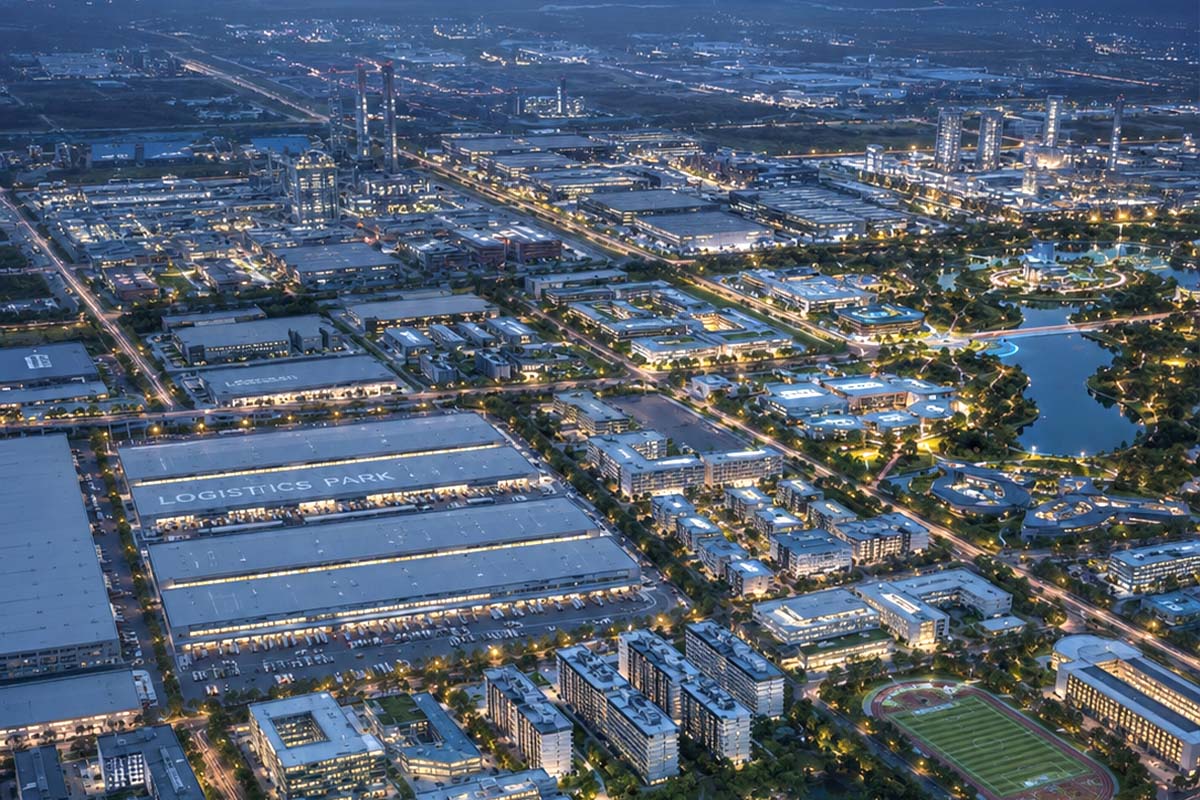
Gujarat has established itself as one of India’s major industrial destinations, supported by manufacturing clusters, industrial estates, investment regions and sector-specific infrastructure. With GIDC managing 239 industrial estates across the state, businesses have access to a wide range of locations for manufacturing, warehousing and logistics operations. But as industrial businesses become more complex, choosing a location is no longer simply about finding the right industrial land in Gujarat. A plot may provide the physical space for a factory or warehouse, but successful operations depend on much more: reliable utilities, internal roads, logistics connectivity, workforce support, safety, and room for future expansion.
This is why businesses need to look beyond the land itself and evaluate the industrial infrastructure in Gujarat surrounding it.
Build where your business has the infrastructure to go further
Find Your Ideal Industrial Location
Industrial Land Is Only the Starting Point
For an industrial business, land is the foundation. But once operations begin, several additional requirements come into play.
- Raw materials need to reach the facility.
- Trucks need suitable access.
- Employees need practical transportation and support facilities.
- Production depends on reliable power and water.
- Finished products need efficient routes to warehouses, customers and markets.
GIDC’s industrial-estate model itself includes infrastructure such as roads, water and drainage, power and gas infrastructure, streetlights and other supporting facilities, depending on the requirements of the estate.
This demonstrates an important principle: industrial land becomes more valuable when it is supported by the infrastructure needed to use it efficiently.
- Internal Roads Are Critical for Industrial Operations
External connectivity is usually one of the first things businesses examine when evaluating industrial land. However, internal road infrastructure can be equally important. Manufacturing and logistics facilities often deal with heavy vehicles, raw-material deliveries, and frequent movement of finished goods. Internal roads therefore need to support commercial traffic, turning movements, loading and unloading, and emergency access.
Businesses evaluating industrial parks in Gujarat should consider:
- Internal road width
- Entry and exit points
- Heavy-vehicle movement
- Loading and unloading access
- Traffic circulation
- Emergency routes
For example, Mascot’s Vitthalapur development features 18-30 metre internal roads and dedicated entry and exit points, designed around industrial movement. Good external connectivity matters, but it becomes significantly more useful when internal infrastructure supports efficient movement.
Your next industrial investment deserves infrastructure that works as hard as your business.
Discover Mascot’s Industrial Projects
- Reliable Utilities Support Day-to-Day Production
A factory cannot operate efficiently without dependable utilities. Power, water, drainage, sewage management, and waste-handling infrastructure should therefore be considered during site selection rather than after the land has already been purchased.
Businesses should understand:
- What utility infrastructure is available?
- What capacity is provided?
- How reliable is the supply?
- Is drainage adequately planned?
- Can the infrastructure support future expansion?
For businesses considering industrial land for sale in Gujarat, these questions can help distinguish between a plot that is simply available and a location that is practically prepared for industrial operations.
- Connectivity Should Support the Entire Supply Chain
An industrial location should not be evaluated only by its distance from a city or highway. Manufacturers need to consider the complete movement of goods from suppliers and raw-material sources to production facilities, warehouses, distributors, and customers. For export-oriented businesses, access to ports can also be important. For manufacturing clusters, proximity to suppliers and related industries can influence logistics efficiency. Sanand is one example of how industrial location and connectivity come together. Mascot’s 50-acre Industrial & Logistics Park in Sanand is located adjacent to Sanand GIDC and connected to NH-47, placing it within an established industrial environment.
Therefore, businesses should assess not just where the land is, but how efficiently the location connects the entire supply chain.
What if your next industrial address could solve more than just your space requirement?
Explore Your Industrial Options
- Workforce Infrastructure Matters Too
Industrial infrastructure is not only about roads and utilities. It also needs to support the people who operate the facility. Manufacturing businesses may require operators, technicians, engineers, supervisors, security teams, and other workers. For larger industrial developments, supporting facilities can make the location more practical for businesses and employees.
These may include:
- Employee accommodation
- Canteens
- Medical facilities
- Security infrastructure
- Common facilities
- Training and support spaces
Mascot’s Sanand development includes facilities such as a medical centre, dormitory and canteen, alongside utilities, internal roads and security infrastructure. Considering workforce requirements at the site-selection stage can help businesses create a more practical long-term operating environment.
- Future Expansion Should Be Part of the Initial Decision
One of the biggest mistakes businesses can make is choosing an industrial location based only on today’s requirements. A growing company may eventually need additional production lines, warehouse space, parking, utilities, or employee facilities. If the surrounding development cannot accommodate that growth, relocation may become necessary. This makes scalability an important factor when choosing industrial land.
Mascot’s portfolio includes developments of different scales, including its 50-acre Sanand Industrial & Logistics Park and the 385-acre Mascot Industrial City in Vitthalapur, giving businesses options based on their operational and expansion requirements.
Don’t let the perfect plot become the wrong place to grow.
Find an Industrial Ecosystem Built for Growth
- An Industrial Ecosystem Can Offer More Than an Isolated Plot
A well-planned industrial park can bring several business requirements together within one broader ecosystem. Manufacturers, suppliers, logistics companies, and other industrial businesses operating within the same region can create an environment with greater access to supporting services and supply-chain networks. GIDC also highlights the advantages of industrial estates and clusters in terms of linkages to raw materials, markets, technology, and common services.
For businesses, this means the industrial ecosystem surrounding a plot can be an important part of the investment decision.
What Should Businesses Evaluate Beyond Industrial Land?
Before choosing an industrial location in Gujarat, businesses should assess:
- Connectivity: Can employees, suppliers, and commercial vehicles reach the facility efficiently?
- Infrastructure: Are roads, utilities, drainage, and essential services adequately planned?
- Operations: Can the location support the company’s production or logistics requirements?
- Workforce: Are employee-support facilities and access considered?
- Safety: Are security and emergency-access provisions available?
- Scalability: Can the business expand without immediately relocating?
- Ecosystem: Does the location connect the business with suppliers, logistics providers, and other industries?
These considerations provide a more complete picture than looking at land size or price alone.
The Future of Industrial Development Is About More Than Land
As Gujarat’s industrial economy continues to develop, businesses are looking for locations that can support more complex operational requirements. Industrial land remains essential, but it is only one part of the equation.
- Reliable utilities support production.
- Internal roads support movement.
- Connectivity supports logistics.
- Workforce facilities support people.
- Scalability supports growth.
Together, these elements create an industrial ecosystem that can support businesses beyond the initial construction phase. Mascot Infra’s developments in locations such as Sanand and Vitthalapur reflect this broader approach, combining industrial space with infrastructure designed around manufacturing and logistics requirements. So, when evaluating industrial land in Gujarat, businesses should look beyond the boundaries of the plot.
Because the right industrial location isn’t just where you build; it’s where your business can operate, expand, and grow.
The smartest industrial decisions start by looking beyond the land.