

 admin
admin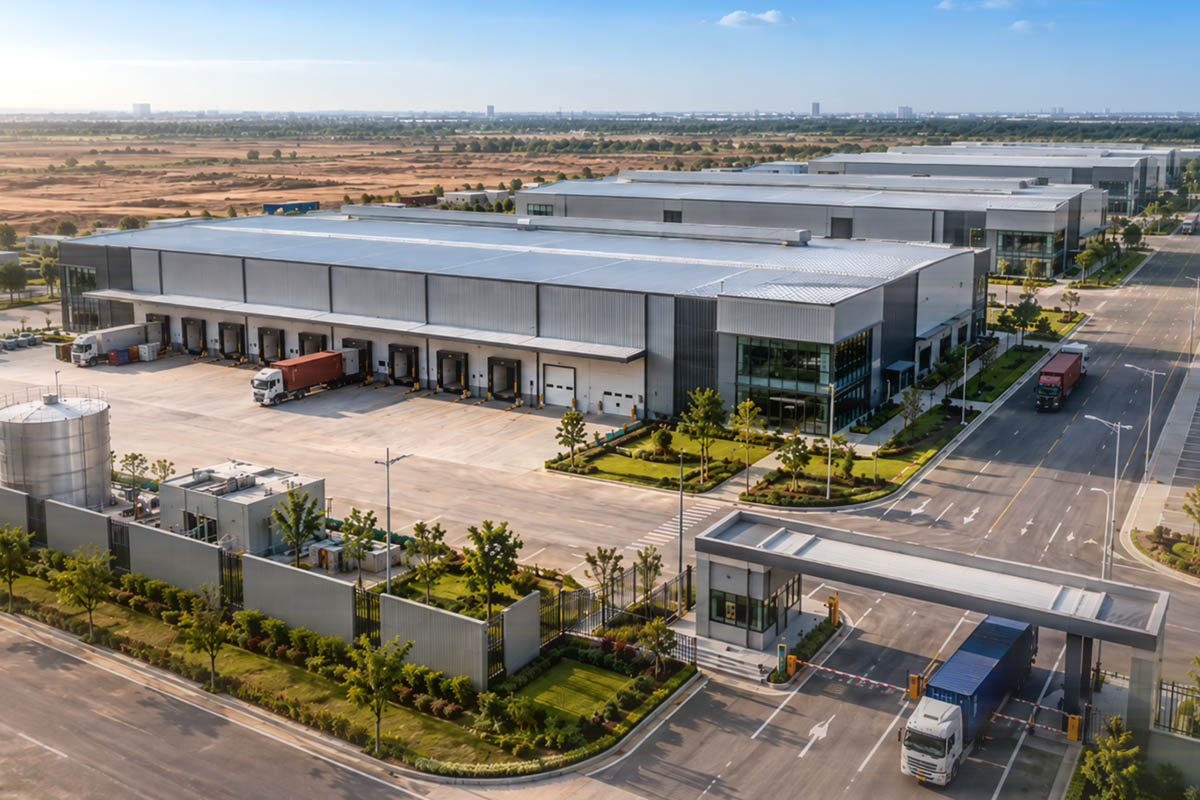
For years, setting up an industrial facility meant starting with a plot of land and building almost everything around it. Roads had to be developed, utilities arranged, approvals managed, and the factory or warehouse constructed before operations could truly begin. That model still works for businesses that need complete control over the development process. But for companies looking to expand faster, reduce infrastructure-related delays, and enter established industrial ecosystems, the question is changing.
Why start with bare land when much of the infrastructure you need can already be in place?
This shift is driving demand for ready-to-operate industrial spaces, planned industrial parks, Grade A warehouses, and built-to-suit facilities. The focus is not simply on getting a ready building. It is about reaching operational readiness faster. For businesses evaluating industrial infrastructure in Gujarat, this distinction can make the difference between simply owning industrial land and having an environment designed to support business operations.
Your next facility shouldn’t start with an empty plot and a long wait.
Explore Mascot’s Industrial Developments
Bare Land Is Only the Beginning
An industrial plot provides the foundation for development, but it does not address the practical requirements of running a business.
A company starting from bare land may need to coordinate:
- Internal roads and site access
- Power and water infrastructure
- Drainage and sewage systems
- Security and emergency access
- Factory or warehouse construction
- Loading and unloading areas
- Telecommunications
- Workforce facilities
- Safety infrastructure
- Future expansion requirements
Each component can add time, coordination, and cost to the development process. A ready-to-operate industrial space approaches the process differently. Core infrastructure is planned as part of the wider development, allowing businesses to focus more quickly on their actual manufacturing, warehousing, or logistics operations. That is the practical value behind the plug-and-play model in infrastructure.
Why Operational Readiness Matters
Time is an important factor in industrial expansion. A delayed facility can mean delayed production, postponed warehousing capacity, slower distribution, and additional costs during the development period. Ready infrastructure can help businesses reduce some of these dependencies by providing an established operating environment. Roads designed for industrial movement, utility connections, security, emergency access and common infrastructure can make the transition to operations more organised. That distinction is becoming increasingly important as manufacturers and logistics businesses look for locations that can support immediate requirements as well as future expansion.
Less time building infrastructure. More time building your business.
Explore Industrial Spaces by Mascot
Bare Land vs Ready-to-Operate Industrial Space
The difference becomes clearer when the two approaches are compared.
Factor | Bare Industrial Land | Ready-to-Operate Space |
Site development | Starts from the ground up | Core infrastructure is already developed |
Utilities | Require separate planning | Integrated into the development |
Internal roads | Need to be developed | Planned as part of the industrial park |
Construction | Full development cycle | Ready-built or BTS options may be available |
Operational timeline | Depends on multiple stages | Can be reduced through existing infrastructure |
Customisation | High | Varies by facility format |
Expansion | Requires individual planning | Can benefit from master-planned development |
Coordination | Multiple development activities | More requirements are managed within one ecosystem |
This does not mean ready infrastructure is the answer for every business. Companies with highly specialised production requirements may still benefit from developing a custom facility. That is where built-to-suit solutions can provide a middle ground between complete ground-up development and a standard ready-built property.
What Makes a Ready Industrial Space Different?
Not every ready industrial property offers the same level of preparedness. Businesses should look at the infrastructure surrounding the facility as carefully as the building itself.
1. Planned Road Infrastructure
Industrial facilities depend on the movement of raw materials, finished goods, containers, and heavy vehicles. Well-planned internal roads and access routes can support smoother movement across the development.
2. Reliable Utilities
Power, water, drainage and other utility infrastructure are fundamental to industrial operations. Their availability and capacity should be evaluated before choosing a location.
3. Safety and Security
Industrial developments also need appropriate emergency access, security systems and safety infrastructure to support day-to-day operations.
4. Logistics Efficiency
The location should make movement between the facility, highways, industrial clusters, markets and ports practical for the business.
5. Scope for Expansion
A facility that meets today’s requirements may not meet tomorrow’s. Businesses should consider whether the wider industrial development provides room for future growth.
This is where a well-planned industrial park can offer an advantage over an isolated plot.
The right industrial space can move your business from planning to production faster.
Why Industrial Parks Are Gaining Attention in Gujarat
Gujarat’s industrial landscape includes established manufacturing clusters and logistics corridors, making infrastructure and connectivity critical considerations for businesses choosing their next location. An industrial park in Gujarat can bring several requirements into one organised environment instead of leaving businesses to develop every supporting element independently.
Mascot Infra’s portfolio reflects this approach across Kadi, Kheda, Sanand, Surat and Vitthalapur. The company states that it has more than 25 years of experience, over 50 lakh sq. ft. of industrial development, and more than 500 acres in development. Its developments span industrial plots, BTS factory sheds, Grade A warehouses, and larger industrial and logistics ecosystems, giving businesses different formats based on their operational requirements.
When a BTS Factory Shed Makes More Sense
Ready-to-operate does not necessarily mean choosing a standard facility. Some businesses have specific requirements related to production layouts, machinery, material handling, storage, loading, or future expansion. This is where a BTS factory shed in Kadi can provide an alternative to developing an entire facility independently from bare land. Build-to-suit development allows the facility to be planned around the occupier’s operational requirements while benefiting from an established industrial environment.
Mascot Industrial Park in Kadi is an 85-acre industrial development planned for manufacturing, warehousing and logistics operations. Its infrastructure includes internal roads, high-speed telecom networks, security, water treatment, a weighbridge, emergency entry and exits, power, sewage treatment and workforce-support facilities such as a medical centre, training rooms and dormitories. This illustrates an important distinction: the facility is only one part of industrial readiness. The surrounding infrastructure also needs to work for the business.
Don’t let infrastructure delays decide when your business can start.
Discover Ready-to-Operate Spaces
Sanand Shows Why Location and Infrastructure Work Together
Location can directly influence industrial efficiency. Mascot Industrial & Logistics Park in Sanand is a 50-acre development adjacent to Sanand GIDC, with access to the GIDC road network and NH-47. The project is positioned for manufacturing and allied industrial operations and provides access to an established industrial ecosystem. For businesses evaluating an industrial and logistics park in Gujarat, such connectivity can be important for moving materials, accessing suppliers, and connecting operations with wider transport networks. The same principle applies to warehouses. A warehouse is not simply about storage capacity. Its location, road access, vehicle movement, and surrounding industrial ecosystem can influence how efficiently goods move through the facility.
Vitthalapur Takes the Integrated Approach Further
Mascot Industrial City in Vitthalapur demonstrates how industrial development can be planned at a larger scale. Spread across 385 acres, the development is designed around industrial and logistics operations with 18-30 metre internal roads, multiple entry points, and infrastructure planned for heavy vehicle movement and future scalability. The project also incorporates sustainability-focused features such as solar street lighting and efficient utility services.
This type of master planning changes the way businesses can evaluate industrial property.
A better industrial setup starts long before the first machine is switched on.
Explore Mascot’s Industrial Infrastructure
What Businesses Should Check Before Choosing Ready Infrastructure
Before selecting a ready-to-operate industrial space, businesses should evaluate more than the advertised built-up area.
Consider:
- Connectivity: How easily can employees, suppliers, and heavy vehicles access the facility?
- Utilities: Are power, water, drainage and other essential services available at the required capacity?
- Facility specifications: Does the building meet production, storage, loading and equipment requirements?
- Safety: What emergency access, security, and safety infrastructure is provided?
- Material movement: Can vehicles and materials move efficiently within the development?
- Scalability: Is there room to expand as the business grows?
- Developer experience: Does the developer have a proven record of delivering industrial and logistics infrastructure?
These factors can determine whether an industrial space is merely available or genuinely suited for business operations.
The Shift Is From Land Availability to Operational Readiness
Starting from bare land still has its place, particularly for businesses with highly specialised requirements and a need for complete control over development. But for companies prioritising speed, infrastructure and scalability, ready-to-operate industrial spaces offer a different starting point. The value lies in reducing the distance between acquiring a location and putting it to work. For businesses exploring industrial park developers in India, the decision is therefore becoming broader than land cost or facility size. Infrastructure quality, connectivity, operational planning and future scalability are becoming equally important. Mascot Infra’s developments across Gujarat demonstrate this infrastructure-led approach through industrial parks, logistics spaces, BTS factory sheds, warehouses and larger integrated industrial developments.
The industrial property decision is changing. The question is no longer only where you can build. It is how quickly the right infrastructure can help you operate, scale and grow.
From bare land to business-ready infrastructure, the starting point matters.